Tips4Allergies

Allergy Types

Learn the types of allergies including food allergies, seasonal allergies, pet allergies, and many more.

Tips4Allergies

Allergy Facts

An allergy is a hypersensitivity disorder of the immune system. Symptoms include red eyes, itchiness, and runny nose, eczema,hives, or an asthma attack. Allergies can play a major role in conditions such as asthma. In some people, severe allergies to environmental or dietary allergens or to medication may result in life-threatening reactions called anaphylaxis. Food allergies and reactions to the venom of stinging insects such as wasps and bees are more often associated with these severe reactions. Not all reactions or intolerances are forms of allergy

Tips4Allergies

Allergy Tests

To pinpoint the allergy problem -- and determine the treatment – your doctor will ask questions about your symptoms and habits. You’ll also need various tests.

Showing posts with label Childhood Food Allergy. Show all posts

Thursday, December 18, 2014

Does Milk Cause Mucus or Cough?

Parents often feel that their child produce more mucus after drinking milk or eating dairy foods. Some people complain that their throat feels coated, and this makes them cough.

However, everyone has mucus. Mucus is produced by cells within the nose, sinuses and lungs.  It consists of water, salt and various proteins that help trap germs and particles of dirt. Antibacterial enzymes and proteins called antibodies in mucus also help to kill germs and protect from infection. Mucus is moved towards the back of the throat by microscopic hair cells called 'cilia', where it is then swallowed.
Too much mucus can make the nose run or drip down the back of the throat, leading to “post-nasal drip” and cough. Infections and allergy can also trigger excessive mucous production, causing cough and sore throats. Heating, air conditioning and some medicines (for example, some anti-histamines) can dry the mucus, which can irritate the throat and be hard to clear.

Does Milk Cause More Mucus Production?

Recent research has shown that the sensation of milk coating the throat is due to the texture of the fluid, and not to increase production of mucus, and that the same sensation occurs with other liquids of similar thickness. Symptoms of cows' milk allergy are very different.
Children with cows' milk allergy sometimes appear to suffer from more frequent infections. This is not because milk causes infection, but rather because children with food allergy are more likely to suffer from other allergic disorders such as allergic rhinitis.
There is now excellent evidence that:
  • Milk does not cause ear problems. Middle ear infections (otitis media) are very common in young children. Allergies causing allergic rhinitis (hay fever) can exacerbate middle ear infections, as the inflammation in the nose reduces the flow of air and mucus from the ears and sinuses. However, allergic rhinitis is usually caused by substances that we breathe in, such as pollen, dust mite, mould spores or animal dander 
  • Dairy products rarely trigger asthma or allergic rhinitis. When they do, nasal symptoms are usually accompanied by obvious symptoms of allergy, such as severe hives, throat or tongue swelling or a drop in blood pressure. Eliminating dairy product does not help asthma or allergic rhinitis
  • Children may occasionally complain of cough after drinking cold milk. However, this is usually due to breathing in cool air as they drink, and usually disappears if the milk is warmed first.
Milk and other dairy products are important sources of calcium and other minerals needed for strong teeth and growing bones. Cutting out milk unnecessarily limits food choices and will affect a child’s nutrition. Unless there is good evidence that milk is causing an allergic reaction, it is important not to remove it from your child’s diet. If a doctor decides that elimination of milk is needed due to allergies, then they should consult a dietician to ensure that your child’s diet is sufficient to meet their nutritional needs (for example, they may need other calcium-containing foods and drinks, or to take a calcium supplement).

Food Additives

Up to 20% of parents report that their children are ‘intolerant’ to food additives such as colourings and preservatives. However, research conducted using ‘blinded’ food challenges (where the child is given a food in which either an additive or a ‘placebo’ is hidden) has found that the rate of hypersensitivity to food additives is much less common – in fact, fewer than 1 in 100 children are thought to have adverse reactions to food additives.

Food additives are substances added to foods, usually to preserve or improve their quality. A number of food additives, both natural and artificial, are reported to cause symptoms in children. These symptoms have included skin rashes, asthma attacks, worsening of eczema, and even anaphylaxis. However, when colourings are given using ‘blinded food challenges’, these reactions are very rare.
Almost all reactions to food additives are non-allergic – that is, they do not involve the immune system (unlike conventional, IgE-mediated food allergy). Sometimes, these reactions may happen because of an inability of the gut to fully digest sugars in what we eat. For example, children who drink a lot of fruit juice often get diarrhoea, as their bodies cannot digest all the fructose sugar in fruit juice. Similarly, many children will develop lactose intolerance after an episode of gastroenteritis; the infection strips away the lining of the gut containing an enzyme called lactase, which is needed to help the body break down lactose, a sugar found in dairy foods. It can take a few weeks for the gut to fully heal, during which the child cannot fully absorb lactose and so develops diarrhoea.
Sometimes, children develop an itchy rash (called urticaria) which may suddenly start a few weeks after a viral infection and persist for many months. This condition is known as chronic urticaria. There is some limited data that about 1 in 3 of these children may experience rash after eating foods containing certain food additives, although this doesn’t happen all the time.
Many foods, such as dried fruits, fruit juice, wine and pickled foods, contain sulphites as a preservative. Some children with asthma can become wheezy after eating these foods, although the effect is almost certainly due to the acid in the stomach reacting with the sulphite, turning it into a gas which can irritate the airway.
In most children, there is very limited evidence for any role of food additives in causing non-allergic food reactions. Reactions may be more common in children with
chronic urticaria, but otherwise there is no reproducible and consistent evidence that additives can cause other symptoms, such as migraine, gut symptoms or aching joints.

Food Additives and Hyperactivity

Many parents are concerned about their child being hyperactive which can cause them to have difficulty concentrating and may result in impulsive behaviours. In fact, hyperactivity may affect between 2% and 5% of children in the UK. There are a number of factors which can affect hyperactive behaviours, including premature birth, genetics and how you bring your child up.
Attention deficit hyperactivity disorder (ADHD) is more than just hyperactive behaviour. It is associated with a specific pattern of behaviour, including reduced attention span and difficulties concentrating, to the extent that they affect the child’s ability to learn and function at home and at school. Children with ADHD often have learning difficulties and behavioural problems.
Since the 1970s, there have been a number of reports of children with ADHD responding to an additive-free diet. A number of studies have been carried out to investigate whether food additives can cause symptoms in children with ADHD, but unfortunately the results have not been consistent and it is difficult to draw firm conclusions.
In 2007, researchers in Southampton published a study which investigated whether childrenwithout ADHD developed hyperactive behaviours after eating certain food colourings and preservatives. They found a small increase in hyperactive behaviour with some additives, but results were not consistent.
Unfortunately, we simply do not have enough data to answer the question of whether food additives affect children’s behaviour. Many doctors have suggested that given the relative ease with which colourings and preservatives can be avoided, it may be helpful to trial an additive-free diet in children with hyperactive behaviour to see if there is any change in behaviour. So if your child shows signs of hyperactivity or ADHD, you may wish to avoid giving them the following artificial colours over 4 to 6 weeks to see if things improve:
  • sunset yellow (E110)
  • quinoline yellow (E104)
  • carmoisine (E122)
  • allura red (E129)
  • tartrazine (E102)
  • ponceau 4R (E124)
Since mid-2010, these colourings have been removed from many foods and drinks in the UK. They were previously found in many foods, including soft drinks, sweets, cakes and ice cream. When used in food, they must be listed in the ingredients, and the food label must now have a warning saying that the colour “may have an adverse effect on activity and attention in children”.
It is important to remember that simply taking these additives out of a child’s diet may not improve symptoms. If you think your child does react to additives, then you should speak to your GP or a dietician.

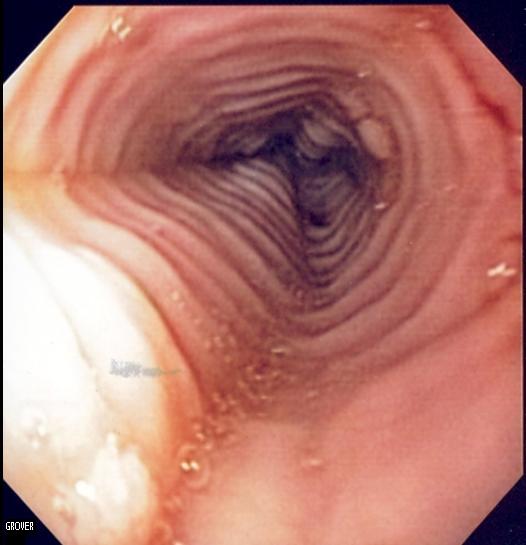
Eosinophilic Oesophagitis (EoE)

The oesophagus is the ‘food pipe’ or muscular tube that connects the mouth to the stomach. Over the last few decades, doctors have found that some children with poor weight gain and problems swallowing have a condition called Eosinophilic Oesophagitis (EoE). This is where the oesophagus becomes inflamed with a particular type of white blood cell called an eosinophil.

EoE is still relatively uncommon, affecting fewer than 1 in 1000 children. However, it is becoming more frequently diagnosed, and this may be partly due to the increase in allergies over the same period of time. At least 50% of children with EoE have allergies, including food allergies, allergic rhinitis (hay fever) and asthma.

Symptoms

This condition is more common in boys (75%) and older children and adults will complain of problems swallowing food, particularly with a sensation of food ‘getting stuck on the way down’. Younger children may not be able to describe this, and so often present with weight loss, pain on eating and swallowing (causing them to eat slowly as a result), and food refusal in very young children. EoE can be difficult to distinguish from reflux, and treating symptoms with an anti-reflux medication may be a helpful test in this age group (although we now know that some patients with EoE will respond to anti-reflux medicines).

Diagnosis

Your child’s doctor may suspect the diagnosis, but the only way to confirm the diagnosis is for your child to undergo an endoscopy. The diagnosis is a clinical one combined with the endoscopic findings.  This is where the oesophagus is examined using a special camera called an endoscope. Usually, your child will be sedated with medicines or an anaesthetic during this procedure. A tissue sample (biopsy) will be taken at the same time and examined to look for the presence of eosinophils. Endoscopy and biopsy are normally performed by a gastroenterologist (stomach/bowel medical specialist).
Diagnosis and treatment are vital as the condition can cause scarring and narrowing of the oesophagus, and may predispose to malignancy in later life.
Allergy testing is unhelpful to diagnose EoE, but may be performed as it may give a clue as to what foods might act as triggers for the EoE. When food is involved, cows’ milk (dairy), wheat, meats, soy and egg seem to be the most common triggers.

Treatment

There are a number of different strategies to treat EoE. Children with EoE are usually looked after by specialists, such as gastroenterologists or allergists, who will decide which option is best for your child.
Treatment options include:
  • Dietary elimination: of specific foods or common food triggers; the resulting diet can be complicated and a dietician will generally advise as to what foods can be eaten, in order to ensure your child’s diet is adequate for their growth and development
  • Special milk feeds: EoE appears to respond to special milk feeds known as Elemental feeds. Your child will usually need to avoid all other foods during this time. Once the inflammation is under control, the diet can be slowly normalised, avoiding certain trigger foods. This process is complicated and lengthy, and a dietician will generally be involved to assist with this process
  • Medication: this usually involves steroid medicines. One effective way of giving the medicine without using oral steroid tablets (which are associated with increased side effects) is to give the steroid as a swallowed liquid (usually mixed with an artificial sweetener) or aerosol. The swallowed steroid reduces inflammation in the oesophagus, and so prevents the scarring that can result from untreated disease
  • Other medicines are under trial at the current time
At the current time, our understanding of EoE remains limited but new research is teaching us more about the disease all the time. There are controversies as to the role of allergy and dietary manipulation, and how many people are actually helped by diet. Furthermore, sometimes symptoms may improve with diet manipulation, but the underlying inflammation can still persist. Some people only appear to suffer symptoms during the pollen (hay fever) season, so nasal allergy may be more important in this group than food allergy. As more research is performed, we will learn how to manage this disease and avoid potential complications

Key Points

  • A diagnosis of EoE should always be confirmed first by endoscopy and biopsy
  • Dietary management is complicated and should be supervised by a skilled dietician to ensure your child receives enough nutrients
  • Eosinophilic oesophagitis is usually related to allergy but requires excluding other conditions
  • The diagnosis and treatment is directed by marrying clinical and histological information

FPIES (Food Protein-Induced Enterocolitis Syndrome)

Food protein-induced enterocolitis syndrome (FPIES) is an unusual type of food allergy. It is much less common than IgE-mediated food allergy, and usually only occurs in babies and very young children. FPIES is caused by an allergic reaction to a food which causes inflammation of the small and large intestine. It differs from normal food allergy as:

  • It is usually a delayed reaction
  • Symptoms are normally limited to the gut (there is no skin rash or swelling)
  • It is not caused by IgE antibodies
  • It is not associated with anaphylaxis, so adrenaline is NOT used to treat the reaction

What are the Symptoms?

In general, the reaction begins around 2–4 hours after eating the trigger food. The child develops profuse vomiting, frequently followed by diarrhoea or loose stools which can last for several days. Occasionally a shorter time frame may be seen. In the most severe FPIES reactions, vomiting and diarrhoea can cause serious dehydration. These children may become pale, floppy, have reduced body temperature and/or blood pressure during a reaction. These children may be mistaken as having an infection, as their blood tests may show an increased white cell count which is often seen in infection.
FPIES is not caused by IgE antibodies, so children experiencing reactions do not develop itchy swollen skin, rashes or facial swelling. However, it is possible for a child with FPIES to also have other allergies including food allergies which do involve IgE antibodies.
Sometimes, children with FPIES have more mild reactions, and if they continue to eat the trigger foods, the allergy can result in poor growth.

Which Foods can Trigger FPIES?

The most common triggers are cows’ milk (dairy) and soy. However, almost any food can cause an FPIES reaction, including rice, cereals such as oats, certain vegetables (frequently from the legume family) and meats such as chicken and turkey.
Some children have FPIES to more than one food protein. For example, some children reactive to cows’ milk have been noted to react to soy and some reactive to rice have also reacted to oats.

Diagnosis

There is no allergy test which can confirm a diagnosis of FPIES. Skin tests and blood tests to measure IgE levels do not help, as the reaction is not caused by IgE antibody. This can make FPIES difficult to diagnose. Your doctor may recommend an oral food challenge when the history is not clear, or if foods from a similar food group are being introduced into the diet of a child who has FPIES. These challenges should always take place under specialist supervision in a hospital.

Treatment

The only treatment for FPIES is to avoid the trigger food. Your doctor will advise as to how to alter the diet to achieve this, and you may receive advice from a dietitian if the foods to be removed include a major food group.
There is no specific treatment for a child during an FPIES reaction. However, they often respond to intravenous (IV) fluids, due to the dehydration. Most families of children with FPIES will be given a letter to present to emergency departments explaining their child’s condition and the appropriate treatment.
There is no role for the use of adrenaline devices in the management of FPIES.

Does FPIES Resolve?

Most children outgrow FPIES by the time they are about three to four years of age. The best way to determine whether a child has outgrown their FPIES is for them to have an oral food challenge; this should always take place under specialist supervision in a hospital.

Essential Information Needs About Food Allergy

Research has shown that parents frequently leave a doctor’s appointment without the information they wish they had asked for. The list below has been found to cover most questions you might have, and it can be helpful to take this with you to the appointment. However, remember that you may not be able to discuss all the questions at a single appointment, and so the doctor may suggest a follow-up consultation.

  • What is anaphylaxis? What is not anaphylaxis?
  • Recognising symptoms of allergic reactions; the timescale of reactions
  • How accidental exposures occur and how to manage risky situations
  • What to feed your child (rather than what to avoid), while ensuring they eat a healthy diet which meets their nutritional needs
  • Practical allergen avoidance: label reading, shopping, cooking, social events, eating out and travel. How to find allergen-free products
  • When and how to use the adrenaline auto-injector device, if prescribed. Revision of technique at each follow-up appointment
  • How to educate other family members, and other adults, who may give the child food
  • Risks and benefits of allergy testing and oral challenges. Interpretation of results
  • When follow-up is required, and why
  • Where to find more information
  • How to teach your child about food allergy

Food Allergy Treatments

The best treatment for a food allergy is to completely avoid the problem food.  Being diagnosed with a food allergy has a massive impact on the whole family. 

Eating is such a central part of day to day life that having to be absolutely sure that a child has no contact with a particular food effects mealtimes, going to school, holidays and social occasions.  A simple supermarket trip has been shown to be almost 40% longer when shopping for a food allergic child.
Parents also need to be able to recognise reactions and know exactly how to deal with them when they occur.  This usually involves carrying antihistamines everywhere the child goes and also, for those children at risk of anaphylaxis, adrenaline injections (see below). 
Children with food allergies are also at risk of missing out of the essential nutrients that they would otherwise get from the food they are avoiding especially in the case of infants with milk allergy.  Fortunately, there are now many specially designed milk substitutes suitable for these children and with the help of a dietician, a nutritious diet can be achieved even in children with multiple food allergies. Dieticians can help parents with ideas about how to make sure that a child with a food allergy has a varied and nourishing diet, and this ensures healthy growth and development. It can also play an essential part of minimising the impact on your lifestyle by offering acceptable foods. It is also possible to obtain special foods for your child, such as wheat-free alternatives to bread and pasta; a member of the allergy team can advise you as to where to buy this, and if it can be obtained on prescription.
Many food allergies, such as egg and milk, are outgrown during childhood whilst allergies to peanuts, nuts, fish and shellfish tend not to go away.  Children with food allergies also have a high chance of having other allergic problems such as asthma, eczema and hay fever.
It is essential that children with food allergies continue to be seen by their doctors as they grow up. Repeating allergy tests can help predict if the allergy has been outgrown so that the food can be carefully reintroduced into the diet.  It is also essential that the child is carefully examined for any signs that they are missing out on any essential nutrients due to their restricted diet, or if they are developing signs of other allergic problems.
Unfortunately, there are no cures for food allergy in the immediate future although exciting research does promise real progress over the next 5-10 years, not only in our understanding of how to prevent allergies occurring in the first place but also for helping those who already have them.
Food allergy can potentially have the greatest impact upon the lifestyle and choices made by a child and their family. However, with clear understanding of the issues, and through having good routines in place to cover both food choices and emergency situations, the impact of food allergy can be kept to a manageable level.

Adrenaline Auto-Injector Pens

Adrenaline injector pens are used for severe allergic reactions where the child may suffer from anaphylaxis and allow adrenaline to be injected quickly and easily to combat the allergic symptoms. The pens are prescribed according to the weight of the child, and are sometimes designated as junior or senior injector pens.
There are now a number of different adrenaline devices available, but they all contain exactly the same medication. They are made by different manufacturers and have a slightly different mechanism in how they are administered.

How to use

  • Appropriate training is needed to administer an adrenaline auto-injector. Ask your GP, allergist or nurse to show you how and your child (if old enough) to administer the auto injector; they will probably have ‘dummy’ pens that you can use to practice with
  • Injector pens come with instructions and are easy to administer, but it is essential that anyone caring for your child understands exactly when and how to use them, and know that immediate follow up with medical care is necessary
  • Training injectors which do not contain adrenaline or a needle are available to registered auto-injector users, from both the Epipen, Jext and Anapen websites
  • Contact Allergy UK for further information about training as well as information on available videos that show how to administer adrenaline via the pens. (Alternatively: A training video is available for viewing on the Epipen and Jext websites)
  • Sometimes a second dose of adrenaline may be required, and for this reason it is important to have more than one auto-injector
  • It is advisable to have between two and four auto-injectors (i.e. two at home and two at school). It can be difficult to get these prescribed but if you explain to your treating doctor your requirements then hopefully this will be achievable
  • An ambulance should always be called following administration of adrenaline as sufferers of anaphylaxis can go on to have a later secondary reaction and the hospital can then administer additional treatment. The hospital can also provide a replacement for the auto-injector you have used once they have checked your child and monitored them
  • Storage is important and injector pens should be in an easily accessible place that everyone at home knows about. In school the pens should be in an unlocked area which the child knows well. Some older children may carry the pens themselves

Good Practice

  • Ask your treating doctor for a management plan that details your management of the condition and also what to do in an emergency
  • Talk to a dietician for information on your child’s diet and adequate provision for nutritional needs. Dieticians can be accessed via your hospital doctor or GP and can also provide information on alternative foods and recipe adaptations
  • It can be a good idea to have designated members of staff at school so that your child knows who to go to. All staff should be made aware of your child’s allergy so that if they develop any symptoms they can be monitored
  • A protocol should be drawn up detailing treatment and advice and staff training (given by a medical professional) should be undertaken regularly
  • A child’s photograph should be kept on the protocol form which should be inside any auto-injector box and staff should familiarise themselves with the photos and names of any children who are at risk of anaphylaxis 
  • Always talk to your doctor or dietician about reintroducing foods that have previously been avoided 
  • Remember that it is very important to be aware of potential cross-contamination when preparing food for allergic children. It is essential that all utensils and food preparation surfaces which are used to prepare foods that may be harmful to your child are not then used for preparing food for your child without thorough cleaning. In the same way cutlery for eating and dishes should not be shared between your child and other individuals

Tips

  • Get together a list of foods that are safe and foods which must be avoided. Try to adapt recipes so you are able to include your child safely. Details of allergenic recipe books are available from Allergy UK and you can ask your local library to order them in for you
  • Have a box of treats at home that always has something to eat in it, so that you will always have ‘safe’ foods available and your child does not feel that they are missing out on treats
  • Think about packed lunches and carry spares in the car in case you are longer than you anticipate
  • Try to be organised, pre-arrange your menus and shopping, freeze and bake essential supplies
  • Make a note of new foods and products that are suitable for your child and where to access them. This can make shopping easier as you will probably find you cannot obtain all the special dietary products from one store
  • Don’t let children share their food with others. Make sure they have suitable alternatives if they are going for example to parties or there are school activities involving food, and keep these supplied so that the teachers are confident they can provide something without having to isolate them due to their allergy
  • Obtain a list of the different names used for food types, for example, food products containing dairy products are sometimes labelled as containing whey or casein. More advice on this can be obtained from the Allergy UK Helpline

Self Help

  • Try to help your child develop confidence in what they eat by helping them check menus and food labels for safe items (free from logos) and allergens. Also help them to learn how to ask about suitable foods when they are out
  • Make sure your child will tell you if they have accidentally eaten something or if they are unsure about the safety of any foods. It is important that they are not frightened by their condition, but they understand that watching what they eat will allow them to stay healthy
  • Some children, especially if they are forming friends, do not want to ‘tell’ on a friend if they have been given a snack which they should not have. Try to encourage them to tell you that way you can manage the situation and let them know there won’t be any repercussions with their friends
  • Some children can feel pressured by their friends and general peer group to try foods that they are unsure of, or to go hungry rather than show that they are different because they have an allergy. A number of books are available that give advice on how you can help and encourage your child to cope with their condition and encourage them to resist peer pressure. For more information on the books available contact Blossom
  • A number of organisations exist that can give advice on how to help children at risk of anaphylaxis. Allergy UK can provide you with help to access this support, as well as further information on precautionary measures that your child and anyone caring for your child can take to minimise exposure to allergens
  • Translation Cards can prove useful when travelling abroad; they provide details of the food allergy in the language of your choice and are available from Allergy UK

Food Allergy in Babies and Children

Almost 1 in 12 young children suffer from a food allergy and they seem to be getting more and more common – but what are food allergies, would you be able to recognise if your child had one and what could you do about it?

What is a Food Allergy?

The last 40 years has seen a dramatic rise in allergic diseases such as asthma, eczema and hay fever, particularly in the Western world.  Along with this ‘allergy epidemic’ has come an increase in food allergies. Once a medical curiosity, almost every class room in the US, UK and Australia now has a child who has to avoid milk, egg, or nuts.  Food allergies occur when your immune system becomes confused – instead of ignoring harmless food proteins, it triggers a reaction, which leads to the release of a chemical called histamine.  It is histamine which causes the classic allergy symptoms of hives or swelling.  More severe reactions are called anaphylaxis, and this may be life threatening.  Scientists are still puzzled as to why there has been such a rapid increase in allergies.  The most popular explanation is the ‘Hygiene Hypothesis’ which suggests that the increasing cleanliness of the modern world is leaving our immune systems under-stimulated.  With too few bacteria and viruses to fight, our body’s defences start to direct inappropriate responses against harmless things such as pollen or foods. Indeed, as parts of the developing world are becoming more westernised, an increase in allergies is being noticed by doctors.
Most serious food allergies start in infancy and early childhood.  They are caused by a relatively small number of different foods.  Milk and egg allergy are the most common and tend to disappear during childhood. The other common food ‘allergens’ vary depending on where you live. Whilst peanut and tree nut allergies are common in the US, UK and Australia, fish and seafood allergies are more common in South East Asia and Southern Europe. Wheat, soy, sesame and kiwi are other common problem foods.

Food Allergies in Different Parts of the World

  • Worldwide – milk, egg
  • USA, UK, Australia – peanut and tree nuts
  • France – mustard seed
  • Italy, Spain – peach, apple, shellfish
  • Israel – sesame
  • Spain, Japan – fish
  • Japan – buckwheat
  • Singapore – birds’ nest, shellfish

How will I Know if My Baby has a Food Allergy?

Food allergies are much more common amongst children who come from families where other members suffer from allergy.  Babies who suffer from eczema are particularly at risk of having food allergies. The more severe the eczema and the earlier in life that it began, the more likely there is to be a food allergy. A baby with severe eczema before 3 months of age is very likely to suffer from food allergies.
Some food allergies are quite easy to spot – as soon as the food is eaten (often for the first or second time), an itchy rash develops, usually around the mouth.  There may also be swelling of the face, runny nose and itchiness as well as vomiting.  In severe reactions, there may be difficulty breathing and if this occurs an ambulance should be called immediately.  Fortunately, severe reactions are very rare in young children and tend to be more of a problem amongst teenagers.
Sometimes, food allergies can be more subtle and difficult to detect, especially if they are delayed allergies.  These allergies tend to be more of a problem in infancy.  In the past, these allergies were sometimes called food intolerance, but this isn’t the correct term because, strictly speaking, an intolerance does not involve the immune system.  Delayed allergic reactions do involve the immune system, but unlike the histamine release characteristic of an immediate reaction, delayed allergies involve parts of the immune system that take much longer to respond.  The end result means it’s difficult to pinpoint a particular food as the problem and sufferers may continue to eat and drink it. 
 
Delayed allergies in infants may cause chronic symptoms such as eczema, reflux, colic, poor growth, diarrhoea or even constipation. The symptoms only get better when the food is removed from the diet, with milk, soy, egg, and wheat being the most common culprits.  However, all of these symptoms commonly occur during childhood and an allergy is only one possible explanation, not the only one.  Trying to work out whether the underlying problem is due to a food allergy can be very difficult and requires the help of an experienced doctor.
In 2011, NICE (National Institute of Clinical Excellence) issued guidelines to GPs on how to assess and diagnose children with suspected food allergy.  If you feel that your concerns are not being taken seriously by your doctor then it would be worth consulting the parents’ guide to these recommendations (www.nice.org.uk).

What Should I do if I Suspect an Allergy?

Immediate allergies to food are usually quite easy to spot because of how quickly they happen after the food is eaten. If you think that your child has had an immediate reaction, it is best to avoid the food until you have seen a doctor.  If you suspect that something in your child’s diet is causing more delayed symptoms such as eczema or reflux then it can be helpful to keep a food diary to see if the relationship between having the food in the diet (or your diet if you are breast feeding) and the symptoms is consistent.  If it is, then the diary will be helpful to the doctor who you take your child to see.

What Can My Doctor do for Me?

Diagnosing food allergies relies on a careful medical history, examination and special allergy tests. Your doctor will ask you about the symptoms of the reaction, whether they have happened every time the food has been eaten, and how long they took to appear.  With immediate type allergies, testing can be done by a blood test or by a ‘skin prick’ test, where food extracts are placed on the skin of the arm and gently pricked.  The results of either test can be very helpful in confirming if the allergy is present.  Unfortunately, with delayed allergies, things are less straightforward as there are not any reliable straightforward tests.  However, careful exclusion diets, where the suspected food is completely taken out of the diet may be recommended with the assistance of an experienced dietician.  If the food is the cause of the symptoms then they should improve when the food is withdrawn. This exclusion period should be followed by reintroduction of the food to ensure than any improvement really was due to the food being removed.  If the symptoms are relieved on exclusion and return on reintroduction then a diagnosis can be reached.

Looking After a Child with a Food Allergy

The best treatment for a food allergy is to completely avoid the problem food.  Being diagnosed with a food allergy has a massive impact on the whole family.  Eating is such a central part of day to day life that having to be absolutely sure that a child has no contact with a particular food affects mealtimes, going to school, holidays and social occasions.  A simple supermarket trip has been shown to be almost 40% longer when shopping for a food allergic child. Parents also need to be able to recognise reactions and know exactly how to deal with them when they occur.  This usually involves carrying anti-histamines everywhere the child goes and also, for those children at risk of anaphylaxis, adrenaline injections.  Children with food allergies are also at risk of missing out of the essential nutrients that they would otherwise get from the food they are avoiding, especially in the case of infants with milk allergy.  Fortunately, there are now many specially designed milk substitutes suitable for these children and, with the help of a dietician, a nutritious diet can be achieved even in children with multiple food allergies.
Many food allergies, such as egg and milk, are outgrown during childhood whilst allergies to peanuts, nuts, fish and shellfish tend not to go away.  Children with food allergies also have a high chance of having other allergic problems such as asthma, eczema and hay fever.
It is essential that children with food allergies continue to be seen by their doctors as they grow up. Repeating allergy tests can help predict if the allergy has been outgrown so that the food can be carefully reintroduced into the diet.  It is also essential that the child is carefully examined for any signs that they are missing out on any essential nutrients due to their restricted diet, or if they are developing signs of other allergic problems.
Unfortunately, there are no straightforward cures for food allergy in the immediate future although exciting research, particularly in the area of desensitisation, does promise real progress over the next few years, not only in our understanding of how to prevent allergies occurring in the first place but also for helping those who already have them.
Dieticians can help parents to make sure that a child with a food allergy has a varied and nourishing diet, and this ensures healthy growth and development. It can also play an essential part of minimising the impact on your lifestyle by offering acceptable foods.

Treatment

Sometimes foods such as hypo-allergenic milk, or other suitable foodstuffs, may be prescribed, or it may be that medication is needed and you may be prescribed anti-histamines, adrenaline injector devices, or inhalers. Adrenaline treatment in the form of an adrenaline injector is sometimes needed when food allergies can trigger the serious reactions, as mentioned above.
Food allergy can potentially have the greatest impact upon the lifestyle and choices made by a child and their family. However, with clear understanding of the issues, and through having good routines in place to cover both food choices and emergency situations, the impact of food allergy can be kept to a manageable level.