Tips4Allergies

Allergy Types

Learn the types of allergies including food allergies, seasonal allergies, pet allergies, and many more.

Tips4Allergies

Allergy Facts

An allergy is a hypersensitivity disorder of the immune system. Symptoms include red eyes, itchiness, and runny nose, eczema,hives, or an asthma attack. Allergies can play a major role in conditions such as asthma. In some people, severe allergies to environmental or dietary allergens or to medication may result in life-threatening reactions called anaphylaxis. Food allergies and reactions to the venom of stinging insects such as wasps and bees are more often associated with these severe reactions. Not all reactions or intolerances are forms of allergy

Tips4Allergies

Allergy Tests

To pinpoint the allergy problem -- and determine the treatment – your doctor will ask questions about your symptoms and habits. You’ll also need various tests.

Showing posts with label Wasp Allergy. Show all posts

Thursday, December 18, 2014

Wasp and Bee Stings in Children


Symptoms

Whilst insect stings can cause unpleasant reactions around the site of the sting, most will be minor and will subside naturally. A severe local reaction may cause swelling with increasing pain over a period of hours, and in some cases, the entire limb that has been stung may swell up. Whilst not serious in itself, if swelling is near the face or neck it should be watched carefully in case it causes difficulty breathing.
A few people may have a serious allergic reaction to bee or wasp stings, leading to anaphylaxis. If a child has been stung and suffers breathing difficulties, a tight chest, a hoarse voice or a swollen tongue, these indicate a serious allergic reaction which may lead to anaphylaxis. Other signs of anaphylaxis are abdominal cramps, nausea, feelings of weakness or fear, dizziness and unconsciousness. Sometimes, people may develop hives and swelling over a part of their body distant to where the sting has occurred; while this is not anaphylaxis, this indicates a mild systemic reaction. In older children and adults (but not young children), such a reaction is considered to be a risk factor for a future severe reaction.

Disease

It is difficult to know how many insect stings occur since these are most often minor and do not need medical attention. A very small number of adults (less than half a percent) may have an anaphylactic reaction to a bee or wasp sting. In children, that number is even smaller, although it is still worth being watchful if your child already has another allergy.
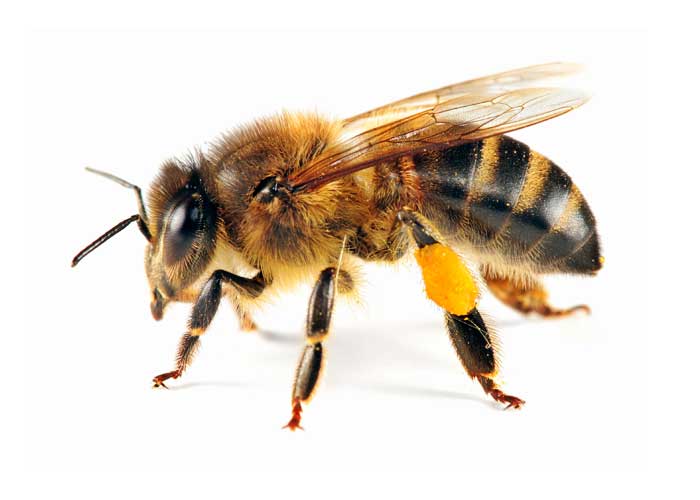
Bees are not aggressive and will generally only sting when they feel threatened. However, the sting is barbed and remains in the flesh after stinging, meaning that a bee can only sting once. However, the sting can continue to pump venom into the body, so must be removed carefully without squeezing the venom sac.
Wasps are aggressive and have smooth stingers, and so can sting more than once.
Bees and wasps have different venoms and so an allergic reaction to one does not mean that a child is automatically allergic to another since these are different allergens. Hornets, however, do have a similar venom to wasps, so there may be some relationship between the allergic reactions to the stings of these two insects.

Diagnosis

It can be difficult to predict if a child will suffer an allergic reaction when next stung since this is not always the case.
The history of a child’s reactions to insect stings is useful in assessing whether they are allergic. Skin prick tests and blood tests are not 100% reliable for insect sting allergy, so sometimes it can be necessary to perform a special skin test (called an intradermal injection) to determine true allergy.

Treatment

For mild reactions using anti-histamines, either in a skin cream on the affected area or orally as a syrup or tablet, can be useful in relieving the allergic symptoms or general discomfort.
Encouraging a child to suck on an ice cube or iced lolly may help to reduce swelling around the mouth and throat if this is a concern.
For moderate symptoms, an inhaler may be recommended or anti-histamines or steroids may be given by injection. In the case of anaphylaxis, an immediate dose of adrenaline will be necessary.
Immunotherapy can be offered as a form of desensitisation to the insect venom, but is only usually available in specialised centres.
Avoidance measures are the most sensible course of action, but this can be difficult due to the difficulty in spotting the insects.

Self Help

  • Avoidance measures are the most sensible course of action, but this can be difficult due to the difficulty in spotting the insects
  • It is important that your child is told to keep away from stinging insects that can cause an allergic reaction, but it is equally important that they do not panic when a bee or wasp comes near them. They should be encouraged to stay calm and gently brush the insect away if it lands on them
  • As your child gets older discourage them from wearing highly scented sprays as these can attract wasps
  • If eating or drinking when wasps are prevalent then make sure your child stays inside at this time
  • In the UK insect stings from bees, wasps and hornets, can cause allergies but, when travelling abroad, be aware of the other stinging insects that can pose a hazard, i.e. fire ants and yellow jackets
  • Be aware that insect repellents do not work against stinging insects
  • Wasps and bees are most common during the summer and early autumn, and if going out, encourage your child to cover their skin with clothing as much as possible. If not covered always take an item of clothing that they can use to cover their skin if they find that the insects become a nuisance
  • Discourage your child from wearing open toe sandals or walking barefoot outside
  • Bright colours attract insects as if to flowers, so you could consider encouraging your child to wear dark or pastel colours
  • Do not let your child drink from open cans of drink that have been left outside as wasps are attracted into them and cannot be seen

Tuesday, December 16, 2014

Allergy to Wasp and Bee Stings

Anyone can become allergic to bee and wasp stings, but those most likely to become bee allergic are bee keepers. Those who work in gardens are also more likely to become either wasp or bee allergic. It is unusual to be allergic to both insects.


Insect stings are more common in children, but children appear to be less likely to experience severe reactions. In the USA, it is estimated that potentially life-threatening systemic reactions to insect stings occur in around 1 in 150 children, compared to 3 out of 100 adults. While severe reactions can occur as a result of a sting, deaths from stings are extremely rare, and mainly affect older people. Most people survive sting allergy reactions, even if they receive no effective treatment, so DON'T PANIC.

Symptoms

1. Localised reactions
Swelling at the site of the sting, which can be more than 10 cm in diameter and last for more than 24 hours. The rest of the limb may be involved but no generalised symptoms are present. These reactions are more common in children than in adults.
2. Mild systemic reactions
These reactions are characterised by skin swelling and hives in an area of skin remote from the sting. Children experiencing these reactions are not thought to be significantly at risk of future life-threatening reactions compared to others. However, in older children and adults, such reactions are considered to be a risk factor for a future severe reaction.
3. Moderate / severe systemic reactions (Anaphylaxis)
Any or all of the following symptoms may be present:
  • Swelling of throat and mouth
  • Difficulty in swallowing or speaking
  • Difficulty in breathing - due to severe asthma or throat swelling
  • Hives anywhere on the body, especially large hives
  • Generalised flushing of the skin
  • Abdominal cramps, nausea and vomiting
  • Sudden feeling of weakness (drop in blood pressure)
  • Collapse and unconsciousness
The symptoms of anaphylaxis occur because the sting causes the release of allergy-producing chemicals (mediators) into the blood which can affect the whole body, and in particular, the breathing and blood circulation.

Diagnosis

Insect allergy should be confirmed by measurement of the allergen specific IgE antibody in blood (this involves no risk to the patient), although the blood tests are not 100% reliable. Note that skin prick testing is not reliable for diagnosing allergy to bees and wasps, and usually skin tests must be performed which involve a small injection under the skin, known as an intradermal injection. This can be a little painful, but is not known to cause anaphylaxis when performed according to agreed guidelines. These tests are available at NHS allergy clinics.
It is important to be referred to an Allergy Specialist as people at risk of future of severe reactions should be given an adrenaline auto-injector device and taught how to use these.
It is essential that sufferers and families/ associates of anaphylactic individuals are experienced in the administration of adrenaline using one of the prescribed devices. All the companies can provide placebo practice devices. The necessary techniques should be practiced under the supervision of a trained allergy nurse or specialist. It is essential to ensure that the injection is not out of date. Allergic people should keep two dose units of adrenaline with them at all times. A repeat dose may be needed while awaiting the arrival of emergency services.

Prevention

Strategies to avoid bees and wasps can be effective in reducing the risk of future stings:
  • Bees normally only sting in self-defense. The best protection is light coloured clothing, covering much of the body (particularly the feet) and avoiding scents
  • Bees are attracted to bright colours and scents. Don't confuse them by pretending to be a flower! Avoid wearing perfumes, bright colours and flowery prints
  • Wasps tend to nest in logs, walls or underground. They are generally more aggressive than bees and are attracted to food and drink, so don't drink blindly from drink cans when outdoors
  • Stings often occur on bare feet so people with allergies to bites or stings should always wear shoes when outdoors
  • If gardening, wear long sleeves, long trousers and gloves 
  • Avoid provoking bees and wasps
  • Have nearby nests removed by professionals
  • If you are allergic to bees or wasps, drive with the windows up and the air conditioner on

Management

If the sting has been left behind, it can be helpful to remove it gently in order to prevent further venom release. Do not pull it out with your fingers, and this may squeeze the venom sac causing the opposite effect. It is best to flick the sting out with your nail. Generally speaking, wasps do not leave their sting behind, this means that they may sting you more than once. If possible place an icepack (pack of peas will do) on the area of the sting and ideally sit down or lie down, especially if feeling faint.
1. Localised reactions (involving swelling of affected area, urticaria and flushing):
Use a non-sedating, rapid acting antihistamine as advised by your GP or pharmacist. Large local reactions can also be treated with oral steroid tablets 20-30 mg prednisolone as soon as one is stung and repeated daily for up to 3 days. These tablets will need to be prescribed by your GP.
2. Anaphylactic reactions:
  • If an adrenaline (epinephrine) auto-injector device is available, use it immediately
  • An ambulance should be called immediately (999). The controller must be told that the patient is suffering from anaphylaxis
  • Keep the patient lying down and stay with them. Don’t let them stand up or walk
  • If they have not recovered in 5 minutes, give a second adrenaline injection, if available
  • Even if the patient recovers quickly, they must still go to hospital for observation in case of delayed or repeated reactions
  • If the patient has an asthma blue inhaler, they should use it AFTER the injection. But do not delay administering the adrenaline injection

Desensitisation

Many NHS allergy clinics offer desensitisation. This involves injections of diluted wasp or bee venom at regular intervals, usually monthly after an initial build-up course, for up to 3 years. Desensitisation is a very effective way of reducing the risk of a severe reaction to an insect sting in the future, but must be performed in a hospital as there is a slight risk of a reaction to the injection. For more information, see our factsheet on immunotherapy.

Useful tips

  1. Wear a Medic Alert bracelet or medallion. This will have details of the allergy and treatment required
  2. Inform teachers/work colleagues and occupational health advisors of your insect allergy, and treatment required
  3. Do not drink out of cans (beer or soft drinks), as wasps can crawl inside cans where they are not seen until the drinker puts the can to their lips
  4. Avoid walking barefoot on grass, especially if clover is present
  5. Don't pick up fallen fruit, the side you cannot see may have a wasp in it
  6. Get professional help if there is a wasps' nest in or near your home